Discussion Groups
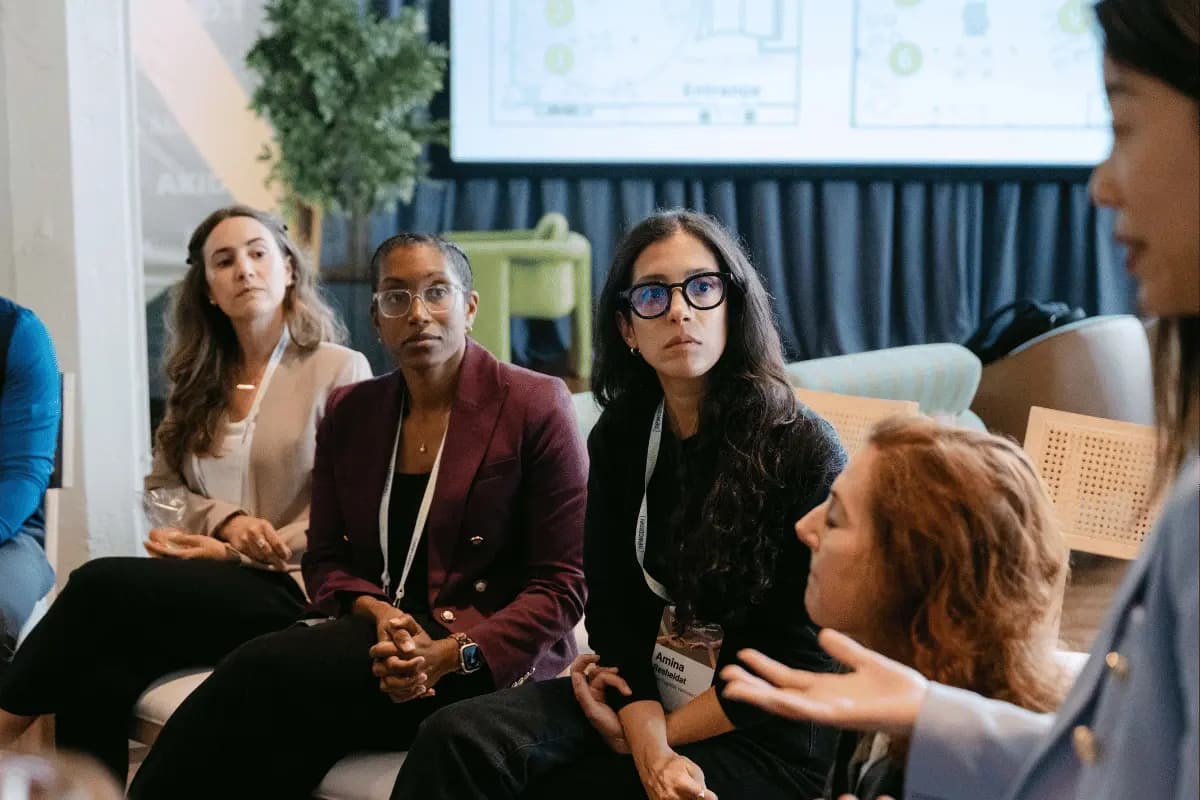
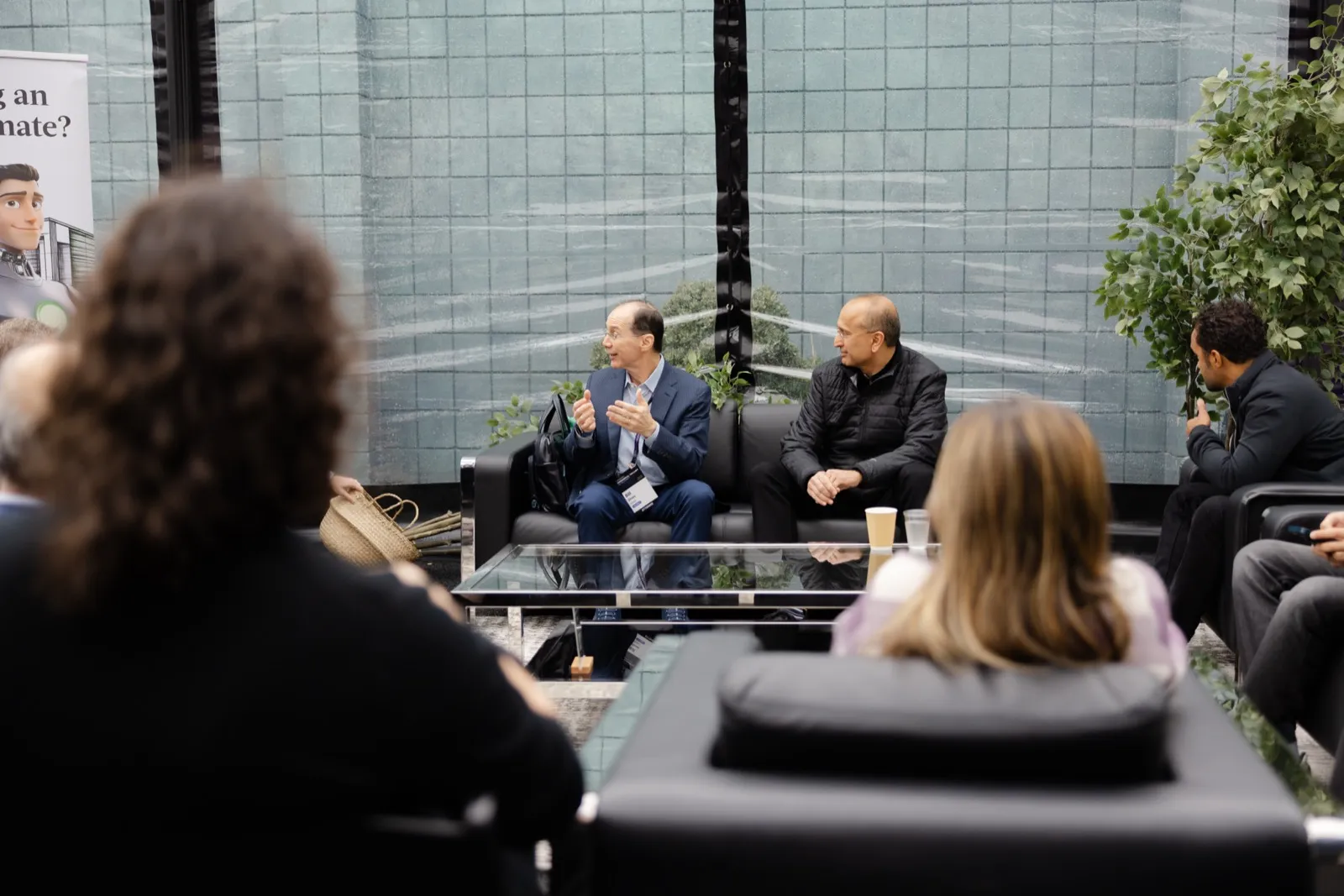
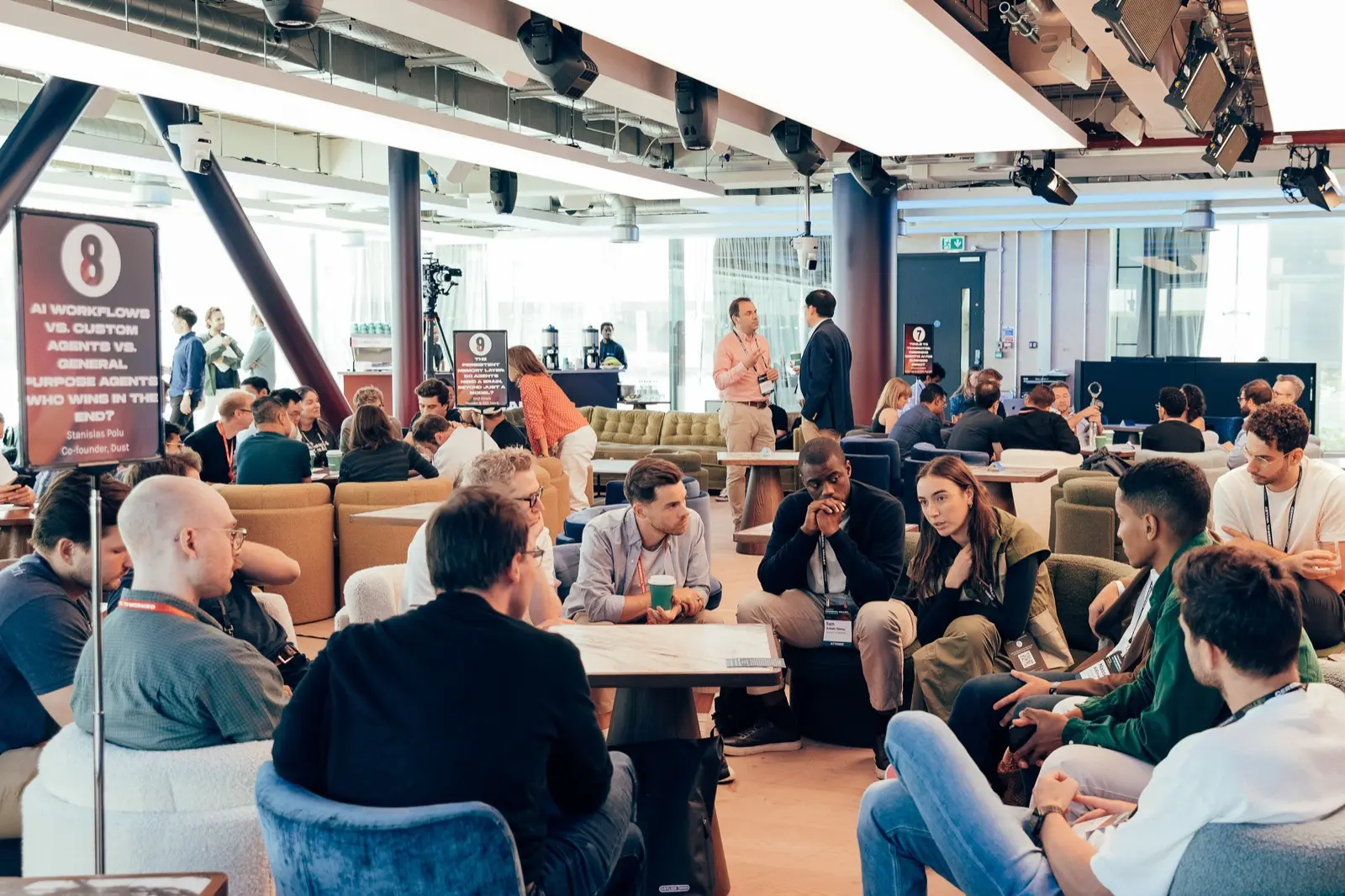
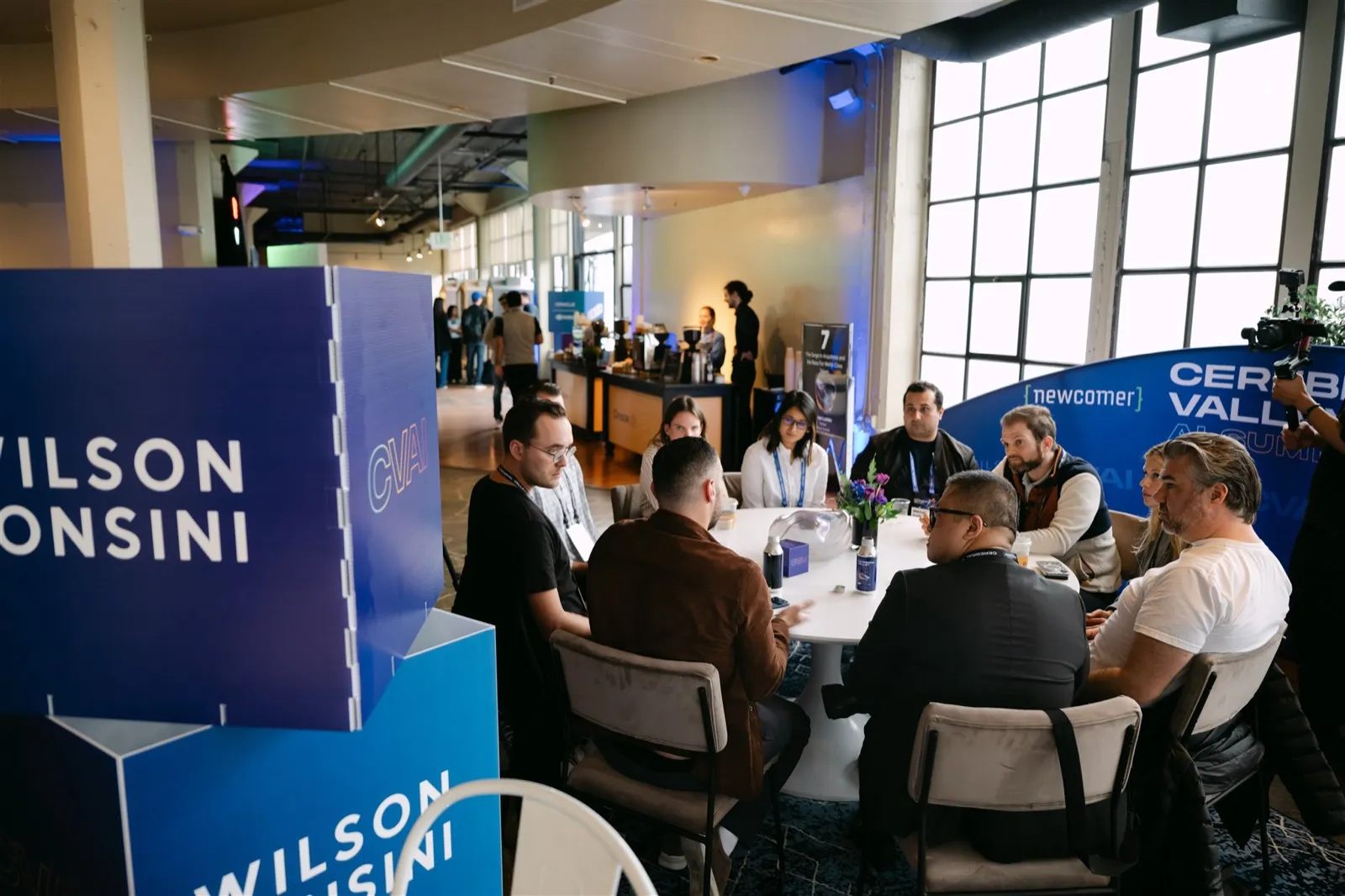
Our discussion groups are intimate, curated conversations led by some of the biggest names in AI. Attendees are assigned to a group based on the topics they're interested in for a collaborative conversation with other AI leaders.
Each group dives deep into a specific topic, giving attendees the chance to engage directly with the discussion leader and fellow participants in a small-group setting.
Discussion Group Topics
Attendees were assigned to one of the following groups based on their interest and expertise.

Joon Sung Park
Founder & CEO
Simile
The Next AI Frontier: Simulating the Future Before Building It
AI has transformed how we create, build, and automate. But what if it could also help us predict what happens next? As models become increasingly capable of understanding human behavior, we're approaching a world where companies can simulate how people, markets, and organizations might respond to decisions before making them. Join Joon Park, Co-Founder and CEO of Simile, for a discussion on the emerging field of behavioral simulation, what it takes to build AI that can predict human decisions, and how simulation could reshape the way we build products, run companies, and make investments.

Emmett Shear
Founder & CEO
Softmax
4HA Club: Tips and Tricks for Breeding, Training, and Grooming Our Agents
Everyone in the room is raising agents now: choosing models and scaffolds (breeding), shaping behavior with prompts, evals, and feedback loops (training), and keeping them reliable and presentable in front of real users (grooming). In the spirit of a 4-H club at the county fair, this is a hands-on swap of what actually worked, what didn't, and what you wish someone had told you earlier. Bring one trick and one failure.

Michael Grinich
Founder & CEO
WorkOS
Every App Is Now an API
If agents become the main consumers of software, what happens to UI, pricing and the product moat? As agents navigate across apps and act on users’ behalf, software companies may need to rethink what they build, how they charge and who owns the customer relationship. What makes a product indispensable when users no longer need to open it?

Keith Peiris
Founder & CEO
Lightfield
Running Forecasting and Planning Off a Business World Model
The quality of analysis or work an agent delivers is dependent on the quality of the data and context it’s provided. Because of that, companies have begun to invest in building ‘business world models’ - live representations of their companies that give agents context for forecasting, scenario modeling, and strategic planning. This session covers how to construct a business world model for your company, what you can do with one, and how to get the rest of the company to use it.

Zoë Weil
Founder & CEO
Sequen AI
What Did AI Earn You?
Enterprise AI budgets have grown much faster than anyone’s ability to say what they returned. CFOs are asking, and AI platforms are adding spend controls to answer them. This session gets into what a credible standard of proof for AI looks like, why live A/B tests against production beat benchmark wins, and which deployments are moving the top line versus just the cost line.

Dmytro Dzhulgakov
Co-Founder and CTO
Fireworks
Enterprise Fine-Tuning Moves Into the Mainstream
Why more enterprises are adapting models to their own data and workflows, and what that means for agents in legal research, coding, and knowledge work.

Carina Hong
Founder & CEO
Axiom Math
The Developer's Next Job: Verified Coding
AI is on track to write most of the world’s software, but almost none of that code is verified. LLMs are fundamentally probabilistic and generate plausible outputs rather than provably correct or safe ones - a problem that bigger and better models won't ever solve. Manual code review can’t keep pace, and unverified code is an unacceptable risk in fields like security, payments, and chip design. Verified coding gives developers a formal proof that code does what they asked for, but it also raises a harder question: did they ask for the right thing? This is already happening in mathematics, with AI producing verified proofs at scale with minimal human intervention. Now we need to bridge the gap to other domains like software and hardware. This discussion will explore approaches to intent-driven verified coding and how the developer’s role will shift from writing code to specifying intent and overseeing verification.

Jai Das
Founder, President & Partner
Sapphire Ventures
Speed Is the Product: How Do You Measure "Fast" in the Agent Era?
As voice, video, and agentic assistants become mainstream, response speed increasingly decides whether users stay. Inference is moving into the thousands of tokens per second, and latency is starting to shape what founders can build, not just what it costs to run. But the way the industry measures performance hasn't kept up: most benchmarks were designed for single-prompt workloads, not agents that chain models and tool calls over many steps.

Navrina Singh
Founder & CEO
Credo AI
Who’s Liable When Agents Get it Wrong?
AI agents are gaining the ability to make increasingly consequential decisions, raising new questions about who bears responsibility when something goes wrong. As AI capabilities advance, who should be liable when an agent causes harm, and what protections need to exist before companies can trust agents with greater autonomy? Governance tools, independent audits, and insurance could all play a role. Join a discussion on how the AI ecosystem must evolve to manage emerging risks and give organizations the confidence to embrace more powerful technology.

Wesley Chan
Founder & Managing Partner
FPV
Cockroaches Survive Nukes. Will Your Startup Survive the Bubble?
When the AI hype fades, what separates companies built to last from those riding the wave? A discussion on durable business models, real customer demand, and what it takes to survive a bubble bursting.

Harjot Gill
Founder & CEO
CodeRabbit

Andy Vitus
Partner
Scale Venture Partners
What are the bottlenecks when releasing code at scale?
1. If AI lets us write code ten times faster, what actually stops us from shipping useful software ten times faster? 2. What breaks when dozens—or hundreds—of coding agents are changing the same system simultaneously? 3. Two years from now, what will be the scarcest resource in software delivery— and what are you investing in today because of that?

Eugenia Kuyda
Founder & CEO
Wabi
Why Isn’t AI Multiplayer Yet?
Most consumer AI experiences are built for one person interacting with a model. What would it take to make AI useful together, and what will the first consumer AI product that gets more valuable as more people use it look like?

Hooman Reza Nezhad
Founder & CEO
Solcoa

James Detweiler
General Partner
Felicis
Exploring the Scientific Fringe
While software has been the biggest industry impacted by AI so far, it's also enabling a new set of deep technologies to be developed at scale for the first time. But it's hard to tell which industries—like materials, energy, and manufacturing—might come first. Where should the next wave of “deep science” investment go? Which frontiers look underpriced, and which look overhyped?

Hassaan Raza
Founder & CEO
Tavus
What Does AI Need to Win With Mainstream Users?
Every lab is racing to build the smartest model, and for people who build with AI every day, it has never been easier to use. But power users aren't the mainstream: most people still type into a box, re-explain themselves with every session, and then quietly stop coming back. What actually gets those users back: a smarter model or a better way to work with one?

Lindsey Irvine
Chief Marketing Officer
Nebius
Marketing in the Age of AI
What does it take to get people to care about your product when everyone can generate a polished pitch? As AI changes how companies market and customers decide what to buy, which strategies still work, which need rethinking, and where should founders focus their time and budget?

Jay Jackson
SVP, Global AI and Strategic Customer Operations
Oracle
The Future of Efficient AI Computing: Scaling Performance While Controlling Costs
The discussion will explore how founders are approaching compute efficiency, optimizing AI workloads, and navigating the infrastructure decisions shaping the next generation of AI innovation.

Dan Moroz
Chief Economist
Exa
Economics of Search in the Agentic Age
LLMs and Search have a shared history in the sense that models are trained on the crawled web. But intelligence is not information: a model can reason brilliantly but will not recall every piece of data it was trained on. Meanwhile, legacy search engines were built to sell ads to humans, so they’re optimized around human attention and limitations. Agents can process the results of far more searches, at greater levels of depth, than any person. This discussion will explore how search is being rebuilt for AI, from quick lookups to deep research to search over the web as it existed on a past date. How have agents’ incentives shifted the market, what are the scaling dynamics, and what new product shapes arise when the searcher is an AI?

Rob Naidoff
VP, Americas
SambaNova
The Open-Source Shift: Rethinking the Economics of Inference
What happens to the economics of AI when companies have more choice over the models they run and where they run them? As founders and enterprises explore open-source alternatives to proprietary APIs, the opportunity goes beyond a lower price per token. Which models are good enough for which use cases? When does running models privately deliver better value, and when does it simply shift the cost and complexity? This discussion will lead the group to explore how model choice, deployment and infrastructure shape the real cost of inference, and what that means for founders building sustainable businesses and investors backing them.
Examples From Past Summits
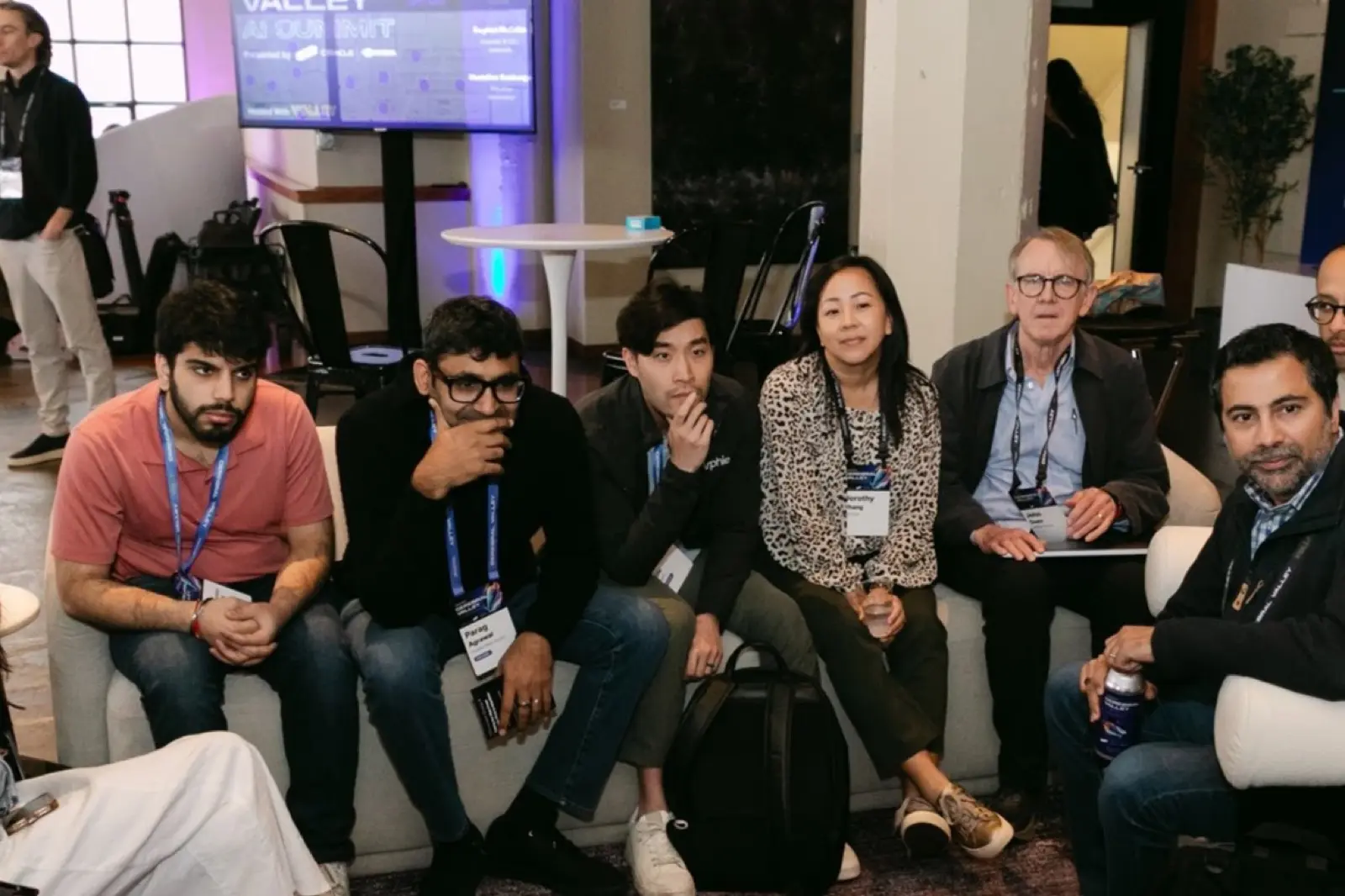
Parag Agrawal
Founder & CEO, Parallel Web Systems
Taking the Web From Human-First to Machine-First
The fabric of the internet is changing as we progress towards agents becoming the primary users of the web. It might not be too far from now that more traffic is agentic than user-driven. How will those agents interact with products, sites, and services?

Julie Bornstein & Kirsten Green
Founder & CEO, Daydream + Founder & Managing Partner, Forerunner Ventures
LLMs Open the Door — Expertise Builds the House
As the first wave of consumer AI applications emerged, many assumed that building a “wrapper” on top of large language models would be simple. The reality is far more complex — and far more interesting. True differentiation comes from being excellent at the edge, where deep domain expertise and nuance meet AI advancements to honor a vertical’s cultural, regulatory, and highly subjective intricacies. This discussion will explore what it takes to translate LLM potential into real consumer value at the application layer.
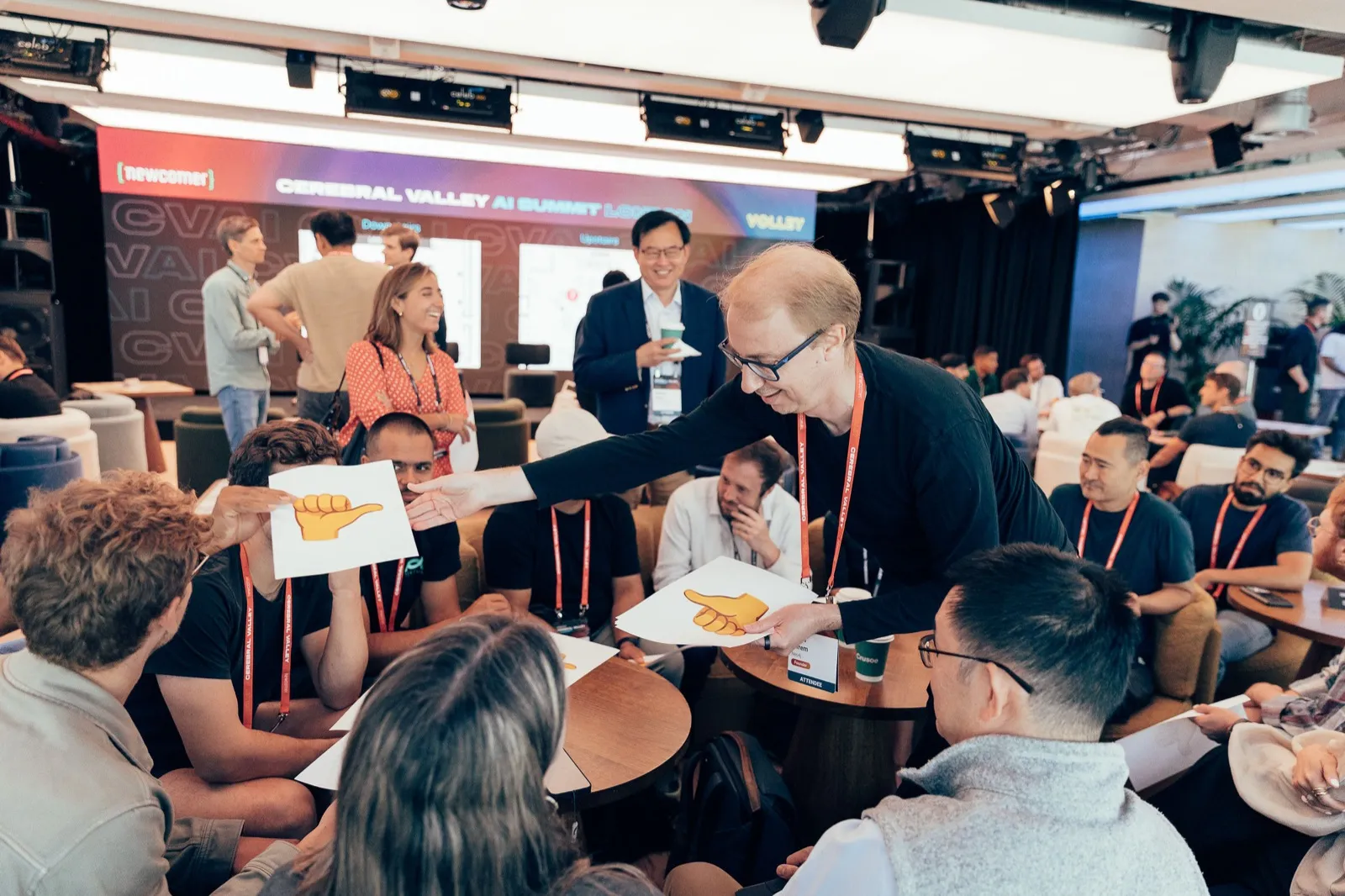
Emil Eifrem
Founder & CEO, Neo4j
The Persistent Memory Layer: Do Agents Need a Brain, Beyond Just a Model?
The next generation of agents won’t just complete tasks - they’ll remember, adapt, and improve over time. Persistent memory is key to making it happen, and it’s fast becoming a new battleground for product defensibility and differentiation. But what does durable memory look like in practice? How do we architect memory that scales with users, respects privacy, and compounds value? The session explores the question of agentic memory: when it’s needed, what founders needed to build lasting agent intelligence, and what VCs should look for when investing in it.